
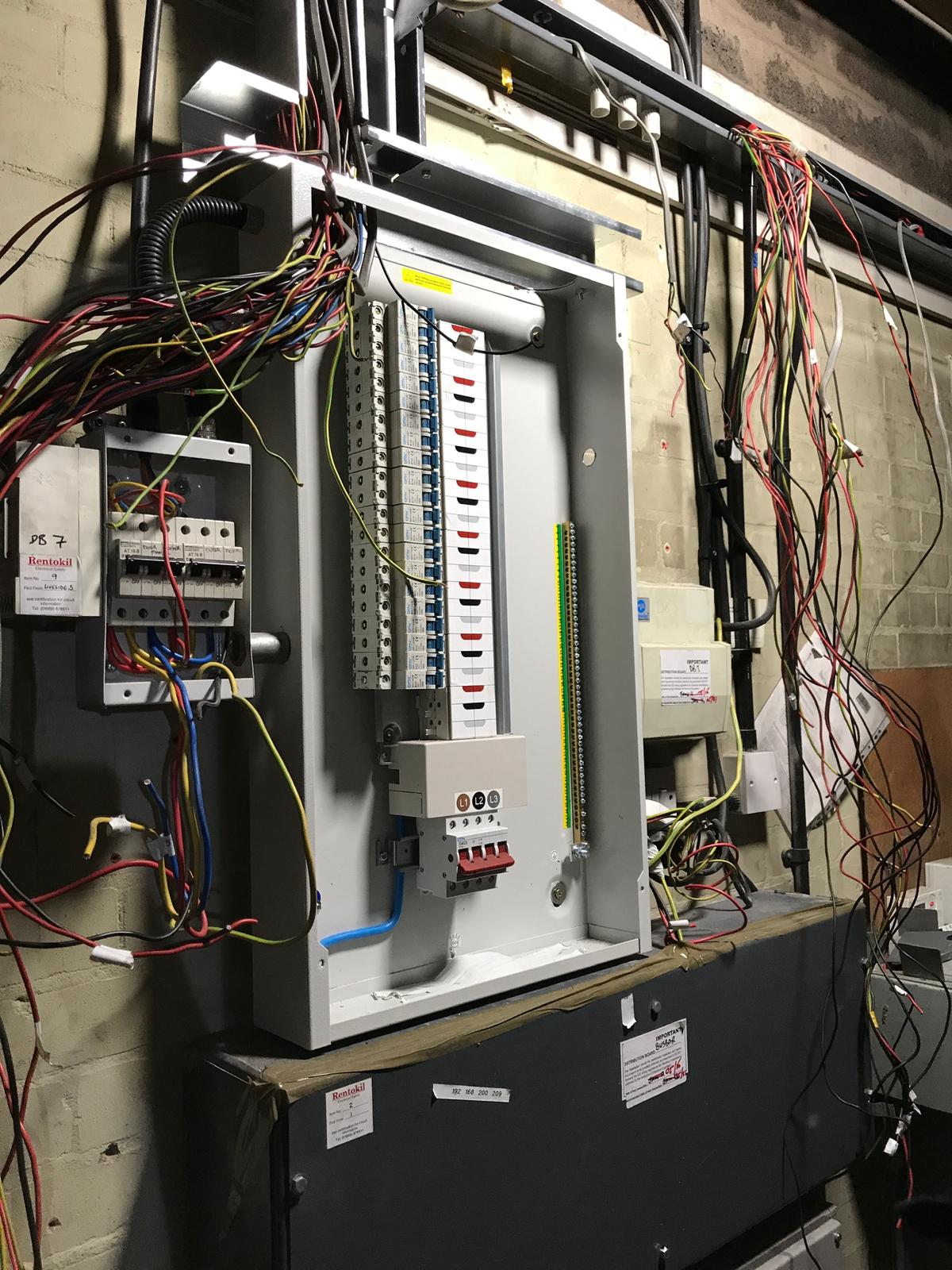
Many older commercial buildings across the UK still contain asbestos-containing materials within electrical installations, particularly older fuse boards and distribution boards.
In many cases, building owners, facilities managers and duty holders are completely unaware asbestos is present until electrical testing or remedial works are carried out.
At Pattco, this is something we regularly identify during EICRs, upgrade works and wider electrical inspections across commercial, education, retail and industrial environments.
While asbestos itself is not always dangerous if left undisturbed and in good condition, it becomes a serious issue when electrical work, maintenance or upgrades are required.
Understanding the risks, responsibilities and correct procedures is essential for maintaining compliance and keeping occupants and contractors safe.
Where asbestos is commonly found in electrical installations
Asbestos was widely used throughout UK construction and electrical manufacturing for decades because of its heat resistance and insulating properties.
Within electrical systems, asbestos-containing materials are commonly found in:
- Older fuse boards
- Distribution boards
- Flash guards
- Backboards
- Arc barriers
- Insulation panels
- Meter cupboards
- Electrical risers
These materials are particularly common in buildings constructed or refurbished before asbestos use was banned in the UK in 1999.
In many cases, the asbestos is hidden behind covers or internal components and may not be immediately visible until inspection work begins.
Why asbestos becomes a problem during electrical works
In many buildings, older electrical installations remain operational for years without issue.
The problem often arises when:
- An EICR identifies the need for remedial works
- A fuse board requires replacement
- Circuits need modification
- Additional capacity is required
- Older equipment begins to fail
- Compliance upgrades are needed
Electrical contractors cannot simply remove or disturb suspected asbestos-containing materials during standard electrical works.
If asbestos is damaged or disturbed, fibres can be released into the air, creating serious health risks.
This means even relatively straightforward works can quickly become more complex if asbestos-containing materials are identified within the installation.
Common signs of asbestos-containing fuse boards
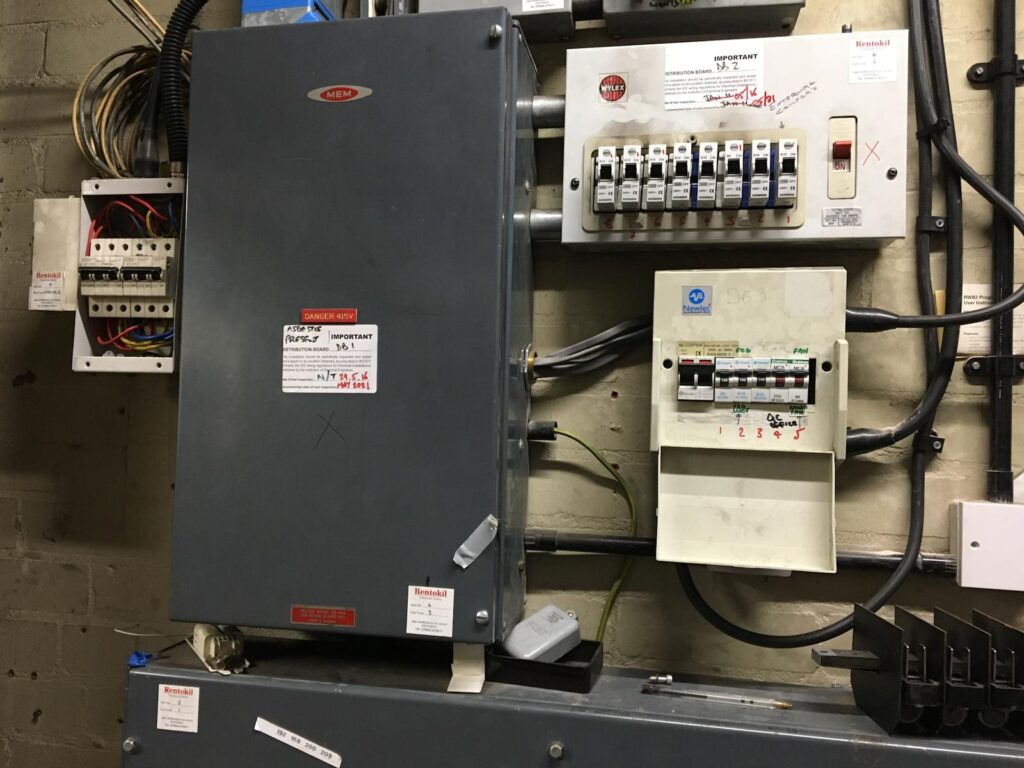
While asbestos cannot be confirmed visually without testing, there are several indicators that may suggest asbestos-containing materials are present within older electrical installations.
This can include:
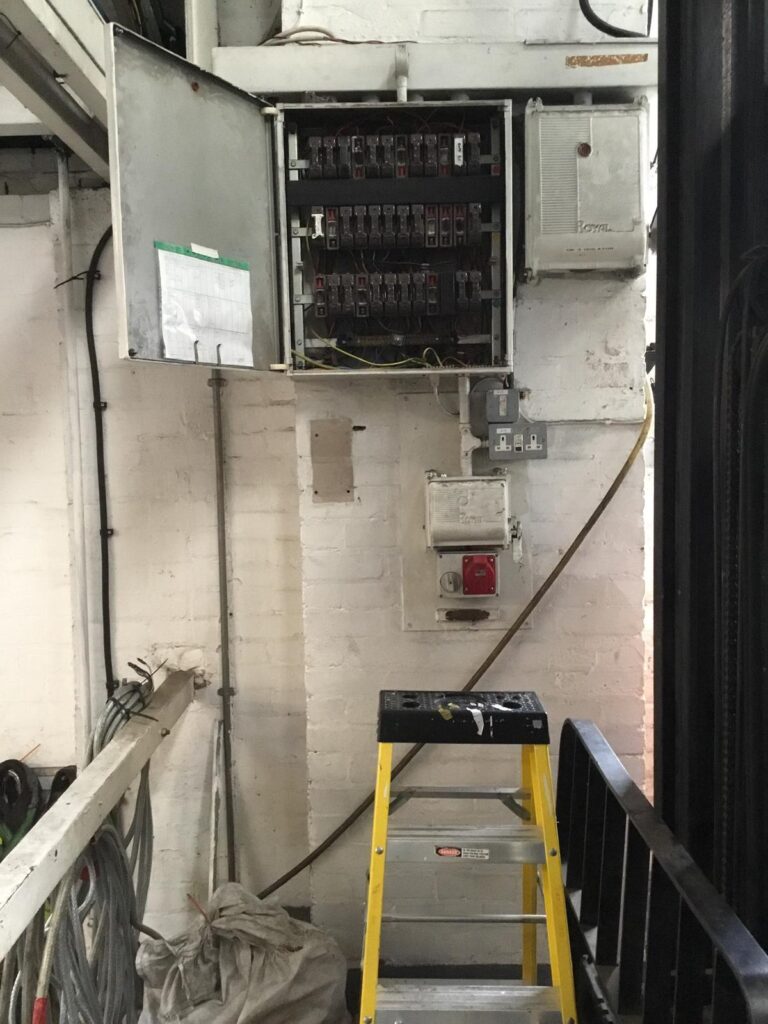
- Older black or brown fuse boards
- Boards with brittle internal flash guards or backing materials
- Installations dating back several decades
- Older industrial or commercial switchgear
- Signs of ageing or deterioration around insulation materials
However, visual identification alone is never enough to confirm whether asbestos is present.
The only reliable way to confirm asbestos-containing materials is through proper testing and inspection procedures.
What happens if asbestos is identified?
If suspected asbestos-containing materials are identified during electrical testing or inspection works, the first step is to stop work and assess the situation safely.
Depending on the condition, location and type of material involved, the next steps may include:
- Asbestos sampling and testing
- Review of existing asbestos surveys
- Isolation of affected equipment
- Licensed asbestos removal
- Coordination between asbestos specialists and electrical contractors
- Replacement of affected distribution boards or equipment
At Pattco, we coordinate this entire process to help clients safely manage both the asbestos and the electrical works required.
This helps avoid delays, confusion and situations where multiple contractors are operating independently without proper coordination.
Why this issue is becoming more common
Many commercial buildings across the UK still contain ageing electrical infrastructure installed decades ago.
As electrical systems continue to age, businesses are increasingly:
- Carrying out EICRs
- Upgrading distribution boards
- Expanding electrical capacity
- Installing new equipment
- Modernising older buildings
- Improving energy efficiency
As a result, asbestos within older electrical installations is being identified more frequently during planned maintenance and compliance works.
In many cases, businesses only become aware of the issue after an EICR highlights concerns with the condition or age of the installation.
The importance of modernising older electrical infrastructure
Older electrical installations can present multiple challenges beyond asbestos alone.
Many older fuse boards and distribution systems:
- No longer meet current standards
- Lack modern protection devices
- Have limited spare capacity
- Are more difficult to maintain
- May not support modern operational requirements
Where asbestos-containing materials are present, replacement often becomes the safest and most practical long-term solution.
Modern distribution boards provide:
- Improved electrical safety
- Better circuit protection
- Greater reliability
- Easier maintenance
- Improved compliance with current regulations
- Capacity for future expansion
Managing asbestos safely and responsibly
The presence of asbestos does not automatically mean a building is unsafe.
In many cases, asbestos-containing materials can remain safely managed if they are:
- Undamaged
- Properly recorded
- Not being disturbed
- Regularly monitored
However, where electrical works are required, it is essential that the correct procedures are followed.
Attempting to bypass proper asbestos management can create serious legal, safety and financial risks.
That is why it is important to work with competent contractors who understand both:
- Commercial electrical compliance
- Safe asbestos management procedures
How Pattco supports commercial clients
Pattco regularly identifies asbestos-related issues during:
- EICRs
- Fuse board upgrades
- Distribution board replacements
- Electrical remedial works
- Commercial refurbishment projects
We support clients by:
- Identifying potential asbestos risks early
- Coordinating asbestos testing and surveys
- Managing safe isolation procedures
- Working alongside licensed asbestos removal specialists
- Replacing outdated electrical infrastructure
- Minimising disruption during works
By managing the process from start to finish, we help businesses safely modernise older electrical systems while maintaining compliance and minimising operational disruption.
Concerned about asbestos within your electrical installation?
If your building contains older fuse boards or electrical infrastructure, or you are planning electrical upgrades within an older property, it may be worth reviewing whether asbestos-containing materials could be present.
Pattco supports commercial clients across the UK and Ireland with:
- EICRs
- Distribution board upgrades
- Commercial electrical testing
- Installation and remedial works
- Asbestos-related electrical coordination
- Ongoing compliance support
Our team can help you assess existing installations, identify potential risks and safely plan any electrical works required. If you’re concerned about asbestos with your electrical installations or would like to learn more about how Pattco can support your organisation, get in touch today.